

Alternatives
We leverage HSBC’s global network to source, originate and develop a range of alternatives capabilities.
Latest insights

Alternatives

Q1 2026 Private Markets Outlook
HSBC Asset Management


Our goal is to provide investors with a wide array of alternative investments tailored to their needs. We offer a broad spectrum of opportunities from hedge funds and private equity, to private credit, real assets, venture capital and natural capital.
Source: HSBC AM, as of 30th September 2025
Why alternatives

Reduced Alternative investments can reduce the overall risk of a portfolio due to lower sensitivity to market movements |

Increased Diversification is important when building a resilient portfolio. Alternative investments can play a role in enhancing diversification due to their low correlations with traditional investments |

Different sources Our diverse alternative investment capability range can provide access to different sources of return |
Why alternatives with HSBC Asset Management
 |
 |
 |
 |



 HSBC Asset Management Alternatives brings decades of experience in alternatives investing to clients. Our platform combines global reach with local insights, helping clients access a world of opportunities. We're proud to offer alternative credit solutions making the most of the strengths of HSBC's network, opportunities in Asia based on our long heritage, and investment strategies that can help finance the transition to net zero."
CEO HSBC Alternatives
Leadership
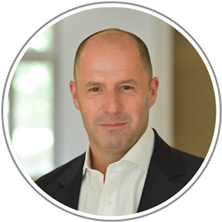
Thorsten Michalik CEO HSBC Alternatives |

Borja Azpilicueta Head of Capital Solutions |

Karim Ghannam Global Head of Real Assets |

Scott McClurg Head of Private Credit |

William Benjamin Head of Alternative Solutions |
Key Risks
- Risk Considerations: There is no assurance that a portfolio will achieve its investment objective or will work under all market conditions. The value of investments may go down as well as up and you may not get back the amount originally invested. Portfolios may be subject to certain additional risks, which should be considered carefully along with their investment objectives and fees.
- Illiquidity: An investment in alternatives is a long term illiquid investment. By their nature, the alternatives’ investments will not generally be exchange traded. These investments will be illiquid.
- Long term horizon: Investors should expect to be locked-in for the full term of the investment
- Economic conditions: The economic cycle and prevailing interest rates will impact the attractiveness of the underlying investments. Economic activity and sentiment also impacts the performance of underlying companies, and will have a direct bearing on the ability of companies to keep up with interest and principal repayments.
- Valuation: These investments may have no or a limited liquid market, and other investments including those in respect of loans and securities of private companies, may be based on estimates which cannot be marked to market until sale. The valuation of the underlying investments is therefore inherently opaque.
- Strategy Risk: Investments into alternatives may, among other risks, be negatively affected by adverse regulatory developments or reform, credit risk and counterparty risk. The credit market bears idiosyncratic risks such as borrower fraud, borrower bankruptcy, prepayment risk, security enforceability risk, subordination risk and lender liability risk.
- Investor’s Capital At Risk: Investors may lose the entirety of invested capital
Important Information
For Accredited and Institutional Investors only and should not be distributed to or relied upon by Retail Clients.
This document provides and may include a high level overview of the recent economic environment, and is for information purposes only. This document is not meant for retail audience and does not constitute an offering document and should not be construed as a recommendation, an offer to sell or the solicitation of an offer to purchase or subscribe to any investment nor should it be regarded as investment research. It has not been prepared in accordance with legal requirements designed to promote the independence of investment research and is not subject to any prohibition on dealing ahead of its dissemination. This document has not been reviewed by The Monetary Authority of Singapore (the "MAS"). HSBC Global Asset Management (Singapore) Limited ("AMSG") has based this document on information obtained from sources it reasonably believes to be reliable. However, AMSG does not warrant, guarantee or represent, expressly or by implication, the accuracy, validity or completeness of such information. Any views and opinions expressed in this document are subject to change without notice. It does not have regard to the specific investment objectives, financial situation, or needs of any specific person. Investors and potential investors should not make any investment solely based on the information provided in this document.
Investors should seek advice from an independent financial adviser. Investment involves risk. Past performance and any forecasts on the economy, stock or bond market, or economic trends are not indicative of future performance. The value of investments and income accruing to them, if any, may fall or rise and investor may not get back the original sum invested. Changes in rates of currency exchange may affect significantly the value of the investment. This document is provided for information only.
In Singapore, this document is issued by AMSG who is licensed by MAS to conduct Fund Management Regulated Activity in Singapore. AMSG is not licensed to carry out asset or fund management activities outside of Singapore. Recipients of this document in Singapore are to contact AMSG in respect of any matter arising from, or in connection with, this document or analysis.
HSBC Global Asset Management (Singapore) Limited
10 Marina Boulevard, Marina Bay Financial Centre, Tower 2, #48-01, Singapore 018983
Telephone: (65) 6658 2900 Facsimile: (65) 6225 4324
Website: https://www.assetmanagement.hsbc.com.sg/
Company Registration No. 198602036R
Contact us
If you are considering investing in alternatives, or want to learn more about our investment strategies, please get in touch.